HideMyAss.com

Monday, June 6, 2011

Free Latest games download


There are two things you need to know going into L.A. Noire, and the first is that this isn't just a 1940s-set Grand Theft Auto. Yes, it features a lot of driving and shooting in an open world, but its real focus is on investigation. And while you're probably already aware of its detective-sim aspects, you might be surprised to learn that you’ll actually spend a lot more time scouring crime scenes and questioning suspects than you will chasing them down and/or shooting them dead.
Second, Noire pulls very few punches. The story of Cole Phelps, an ambitious young detective and war hero working his way up the ranks of the LAPD, it delves into the seedy, frequently disturbing underbelly of 1940s Hollywood. As in seemingly every work of LA-set noir fiction, there's a cesspit of violence and corruption lurking just beneath the sunny glamour, and Cole's job is to wade into it daily, coming into frequent contact with creepy rapists, wife-beating drunks, grieving families and at least a few battered, naked and/or burnt corpses. The content isn’t much more graphic than your average TV cop drama (apart from the occasional nudity), but it's heavy subject matter for a game, and Noire plays it surprisingly straight, with very little of the wry humor that characterizes most Rockstar releases.
Assuming those first two paragraphs didn’t scare you off – or, better yet, that they piqued your interest – odds are you’re going to love L.A. Noire. Bringing together aspects from GTA, the Ace Attorney games and the combined works of James Ellroy, Raymond Chandler and every film noir director ever, Noire feels like the first truly complete detective sim we’ve ever played.
It’s also the most compelling. As it unfolds across 21 separate cases, Noire weaves fascinating narratives about gangsters, serial killers, corrupt doctors and a stolen shipment of army-grade morphine – and while they all seem separate, they gradually come together to create a larger, overarching story that isn’t completely apparent until the very end. All of this is carried out with some fantastic acting, which – thanks to the revolutionary facial-capture technology used in Noire – is at once deeply convincing and faintly eerie.
At the center of it all is Cole: strait-laced, educated and seemingly humorless, he’s out to earn citations and make a name for himself – and at first, he comes off as kind of a robotic douche. That changes over time, however, and – thanks in part to the World War II-flashback cutscenes that unfold between cases – you’ll gradually learn that he’s much more complicated than he appears. While you wait for him to grow on you, you’ll get plenty of personality from his five partners, who change with each “desk” Cole works on over the course of the game.
Some are friendly, some are cranky and some are complete bastards, but one of them will follow Cole at all times to provide hints, running commentary, fire support and (if you don’t feel like driving) the ability to fast-travel to any point on the huge map. (They can also get in the way, though, so try not to wander into any cramped dead ends or you might get stuck.)

So how’s it play?

Regardless of which desk you’re on, most cases involve six basic types of gameplay: investigation, interrogation, running, fighting, driving and shooting. During investigation sequences, you’re set loose in a crime scene (or other place of interest), and wander around looking for clues, which can range from seemingly insignificant documents to gruesome wounds on a corpse. It’s often not enough to just find them, either, and you’ll often have to open an object or move it around a bit for its significance to become clear.
To make this less daunting, there’s an assist feature that vibrates the controller and plays a piano tone whenever you’re near a clue. While the assist is fun, it also tends to turn investigations into bouts of wandering aimlessly in search of the next buzz, so those who’d rather use their actual powers of observation can turn the feature off. (Either way, “investigation” music will play until all clues are found, although you can turn that off as well.)
The clues you find are then instrumental in the interrogation phase, during which you’ll use Cole’s notebook (which functions suspiciously like a PDA) to ask questions of witnesses and suspects. This is also where Noire’s impressive face-capture technology comes into play, as you’ll then need to watch their expressions to see if they’re hiding something.

Above: One of those options is the right answer to his statement – the other two will make you “fail” the question
While the facial capture allows for a full range of human expression, you don’t need to worry about the actors being too subtle; if they’re telling the truth, they’ll usually stare unwaveringly into Cole’s eyes, while most liars look shifty and nervous. At that point, the question isn’t whether they’re lying, it’s whether you have a clue that provesthey’re lying – and if you’re not sure, whether picking “doubt” is maybe a better option.
Think of it like the press/accuse system from Phoenix Wright, except that you only get one chance to correctly judge each answer (unless you’re replaying the case, of course). Get too many wrong, and you’ll still end up completing the case successfully – thanks to branching outcomes, the game always finds a way, whether it’s by introducing a last-minute witness or redirecting you back to some clue you missed – but you’ll likely get yelled at by your captain for incompetence.
It’s a good thing, then, that you can draw on a pool of up to five “intuition” points, awarded for solving smaller cases and/or leveling up Cole’s rank (which also awards new outfits and access to unique vehicles). Spend an intuition point, and you can eliminate a wrong answer during questioning (as well as most of the wrong evidence for backing up a lie accusation), or go online to see how other players have answered the question. It’s also possible to reveal all the clues at a crime scene, if you’re stumped during an investigation.

FREE DOWNLOAD GAMES


Portal 2


Portal 2 is a highly anticipated game for the PC, XBox 360 and PS3. Will it deliver on its promises or is the hype a lie? Read on to find out!
Portal 2 is the sequel to the fan-favorite Portal game, which was a small and short game included with Valve's Orange Box collection. It is a first-person puzzle platformer with an amazing story and wonderful humor.

For Science!

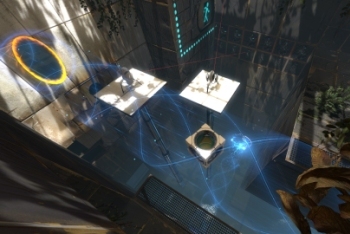
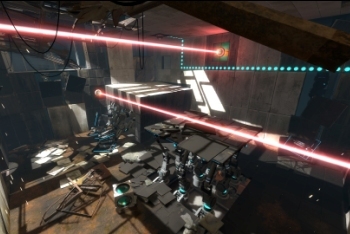
The focus of Portal 2 is the portal gun, a device that can create two portals on flat walls, allowing the player to travel between them like a worm hole. Using this device, the player must navigate the world of Portal 2, stopping every now and then to figure out what needs to be done in order to proceed.
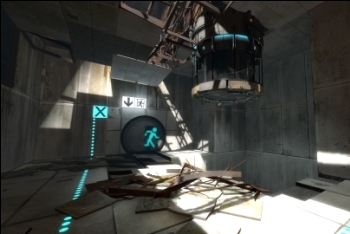
Portal 2 starts off very easy and each level works to teach the player the basics of the game. Very quickly, you will be able to pull off amazing combinations of moves that may have seemed impossible to do before. Driving the game is a compelling story that is both interesting and funny. Like a good book, it will be hard to put this game down!

This was a Triumph!

The biggest complaint about Portal 2 is that the game is too short. However, this is said after a 6-8 hour single player story and a 3-4 hour co-op game with its own unique levels and story. If anything else, saying that a 10 hour game is too short really proves that people loved the game and wanted more. You may still get stuck on some parts and, at times, the game may get frustrating, but this will only make it more satisfying when you solve a level.
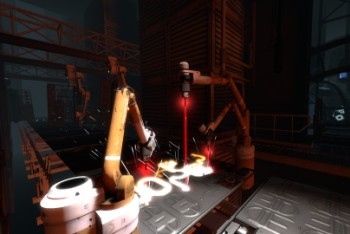
Don't expect an action movie where you take out your enemies with guns and punches. Portal 2 is a thoughtful game. Sure, you will be frying turret guns with death lasers, but that's just part of a puzzle. Overall, Portal 2 is an extremely polished game with very few flaws. It is incredibly enjoyable and is highly recommended that every gamer play i

Sunday, June 5, 2011

DiRT 3 Review


When DiRT 2 was released in 2009 it boasted a lengthy and varied career mode, numerous multiplayer options, and uniformly excellent presentation. Its sequel loses none of those things and also makes some great additions to the formula. Split-screen multiplayer with support for two controllers is now an option, there are more vehicle classes to choose from, gymkhana events and snowy conditions pose fresh challenges, and new multiplayer modes put interesting automotive spins on some first-person shooter favorites. Dirt 3 brings a lot of superb content to the table, and because it offers a plethora of customizable difficulty settings and assists, newcomers and veterans alike can enjoy its excellent off-road action.
Gymkhana events are a great addition to the Dirt formula.
Regardless of which difficulty level you play at and whether or not you take advantage of stability and braking assists, Dirt 3 handles like a dream. There are dozens of great-looking modern and vintage vehicles in the garage, and you race them on all manner of surfaces and in changing weather conditions, but getting behind the wheel of one that you haven't driven before is never a problem. The controls are responsive, and while it's certainly possible to mess up so spectacularly that your ride loses panels and becomes deformed to the point that it's unrecognizable, there are gameplay mechanics in place that ensure you don't feel the need to hold anything back. Even as you hurtle along narrow dirt trails and around icy hairpins, Dirt 3's cars, trucks, and buggies encourage you to push them harder by using excellent audio and rumble feedback to let you know that you're not quite on the edge yet.
Demanding new gymkhana events in which you're challenged to perform tricks in specially designed arenas reinforce how excellent Dirt 3's controls are. In these exciting sessions you score points for crashing through carefully positioned destructible blocks, and for performing donuts, spins, slides, and jumps. String different tricks together to get the crowd pumped, and you build up a score multiplier; display anything other than masterful control by colliding with something, and your multiplier goes down. It's not entirely dissimilar to performing combos in a skateboarding game, except that the tricks are significantly less complex. Stringing successful tricks together against the clock is still plenty challenging, though, and as a result, gymkhanas are great practice for other events. Once you can make a car dance around a cone and slide at speed through a gate or underneath a truck, getting it around a corner in a race doesn't seem like such a big deal.
Every event in Dirt 3, whether it be a point-to-point rally through a Kenyan desert, a head-to-head race in the Aspen snow, or a circuit-based rallycross event that weaves in and out of the Los Angeles Memorial Coliseum, demands precise driving. You can get away with a few collisions here and there, particularly if you take advantage of the five flashbacks at your disposal to correct your mistakes, and it's entirely possible that you might find finishing in first place too easy if you're an experienced player. Turn off some of the assists, crank up the difficulty, and switch from cosmetic damage to realistic damage, though, and you'll find that Dirt 3 is exactly as challenging as you want it to be. At the other end of the scale, if you're new to off-road racing and looking for a way into the genre, Dirt 3 has you covered. In addition to the aforementioned assists and other options, it's the first game in the series to offer a dynamic racing line like those seen in both the Forza Motorsport and Gran Turismo series on consoles.
That racing line can be invaluable as you learn your way around Dirt 3's 100-plus circuits and stages; position yourself poorly as you take a turn or jump over a crest, and you might make a subsequent corner unnecessarily difficult. Also invaluable in the events where she's available is real-life co-driver Jen Horsey, who always delivers the information you need in a clear, concise, and timely fashion. (A male alternative is also available, as is an option to have either co-driver use more complex and detailed language.) If you listen to her carefully, rally stages that wind through the forests of Finland or around the lakes of Michigan don't seem nearly as daunting. You still won't have much time to admire the impressive scenery or to contemplate the foolhardy fans that occasionally run across the track ahead of you, but you're far less likely to wrap your car around a tree or crash through a barrier and into the crowd.
Many of the events in Dirt 3's lengthy Dirt Tour career mode span multiple back-to-back races at the same location, but the game does an excellent job of keeping the action from feeling stale. After finishing the first of three rallycross events in dry conditions, for example, you might race the next during a grip-changing downpour and then the final in wet conditions after the rain clouds have passed and your visibility is improved. And in point-to-point rallies, racing the same stages in different directions can make for a very different experience, especially if you're under a desert sun one stage and having to use your headlights to cut through the black of night the next. Also lending variety to your career is that you invariably have several different events to choose from. The dozens of events that compose the Dirt Tour are organized into four seasons that must be completed in order, but your progress through each season is anything but linear, and you always have the option to return to events that you want to replay in an attempt to improve upon your position or best score/time.